Curiouser and Curiouser: Down the Rabbit Hole with the One-Sided P-value

  WARNING: This is a Bayesian perspective on a frequentist procedure. Consequently, hard-core frequentists may protest and argue that, for the goals that they pursue, everything makes perfect sense. Bayesians will remain befuddled. Also, I’d like to thank Richard Morey for insightful, critical, and constructive comments. In an unlikely alliance, Deborah Mayo and Richard Morey (henceforth: M&M) recently produced an…

read more


Jeffreys’s Oven

Recently I was involved in an Email correspondence where someone claimed that Bayes factors always involve a point null hypothesis, and that the point null is never true — hence, Bayes factors are useless, QED. Previous posts on this blog here and here discussed the scientific relevance (or even inevitability?) of the point null hypothesis, but the deeper problem with…

read more

Preprint: Five Bayesian Intuitions for the Stopping Rule Principle

Preprint: https://psyarxiv.com/5ntkd Abstract “Is it statistically appropriate to monitor evidence for or against a hypothesis as the data accumulate, and stop whenever this evidence is deemed sufficiently compelling? Researchers raised in the tradition of frequentist inference may intuit that such a practice will bias the results and may even lead to “sampling to a foregone conclusion”. In contrast, the Bayesian…

read more

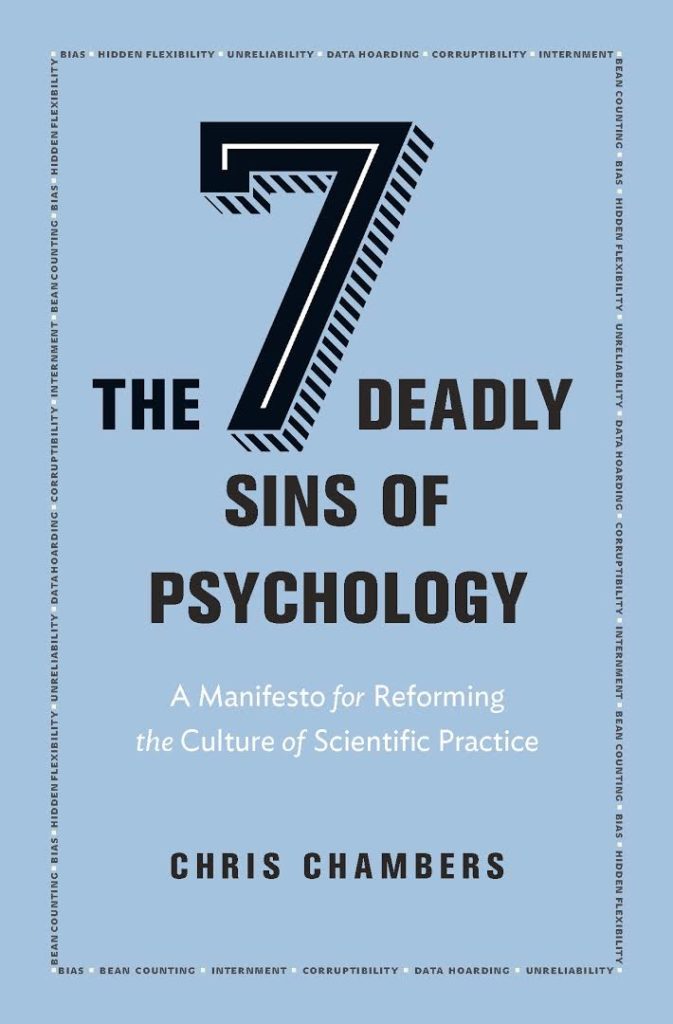
Book Review: “The Seven Deadly Sins of Psychology”

This book review is a translated and slightly adjusted version of one that is currently in press for “De Psycholoog”. The review was inspired by the recent Dutch translation De 7 Doodzonden van de Psychologie (see references below). In his inaugural address on September 11th 2001, Diederik Stapel made a bold claim about the prestige and accomplishments of the field…

read more

Addressing Elizabeth Loftus’ Lament: When Peeking at Data is Guilt-Free

Elizabeth Loftus is one of the world’s most influential psychologists and I have the greatest respect for her and her work. Several years ago we attended the same party and I still recall her charisma and good sense of humor. Also, Elizabeth Loftus studied mathematical psychology in Stanford, and that basically makes us academic family. But…just as Stanford math psych…

read more

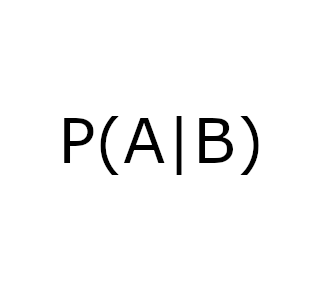
The Man Who Rewrote Conditional Probability

The universal notation for “the probability of A given B” is p(A | B). We were surprised to learn that the vertical stroke was first introduced by none other than… Sir Harold Jeffreys! At least Jeffreys himself seems to think so, and the sentiment is echoed on the website “Earliest Uses of Symbols in Probability and Statistics” Specifically, on page…

read more

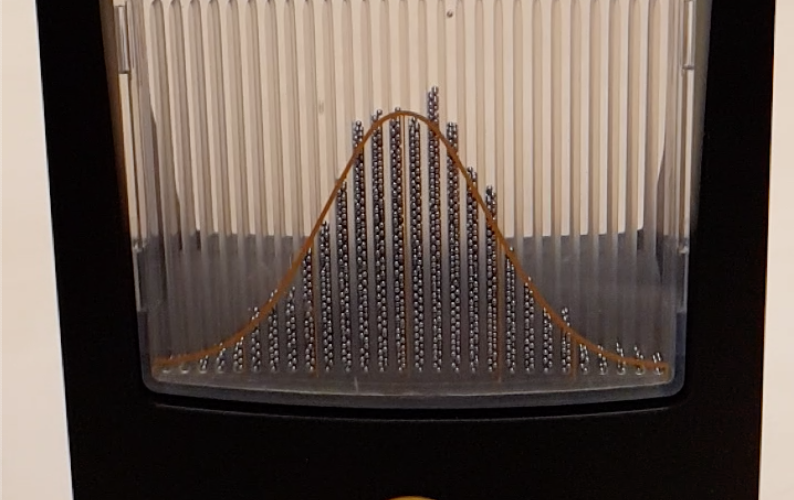
A Galton Board Demonstration of Why All Statistical Models are Misspecified

The Galton board or quincunx is a fascinating device that provides a compelling demonstration of one the main laws of statistics. In the device, balls are dropped from above onto a series of pegs that are organized in rows of increasing width. Whenever a ball hits a particular peg, it can drop either to the right or to the left,…

read more

Redefine Statistical Significance Part II: Caught in a Bad Romance?

In the previous post we discussed the paper “Redefine Statistical Significance”. The key point of that paper was that p-values near .05 provide (at best) only weak evidence against the null hypothesis. This contradicts current practice, where p-values slightly lower than .05 bring forth an epistemic jamboree, one where researchers merrily draw bold conclusions such as “we reject the null…

read more