Do the Data Speak for Themselves? A Bayesian Analysis of a Labor Law Case
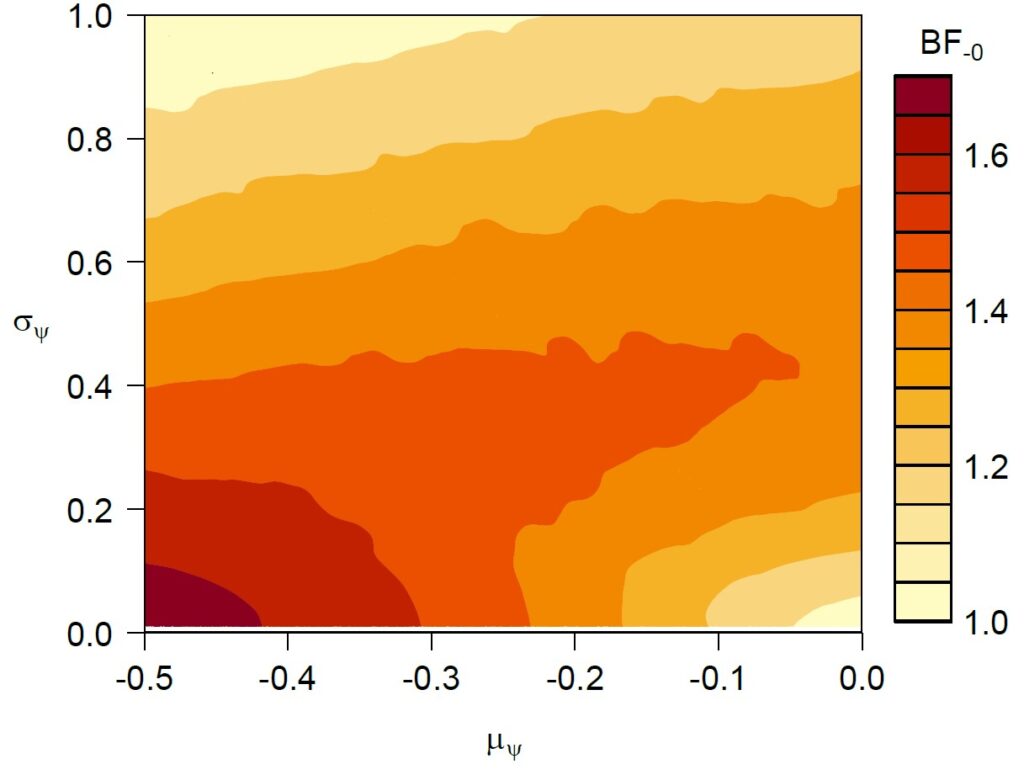
Here we present a Bayesian analysis of data from a recent labor law case [cc; see also Hummel, 2024]. In the case, several trade unions argued that the Dutch Supreme Court had issued particular judgments (i.e., the “Enerco” judgment from 2014 and the “Amsta” judgment from 2015) that effectively imply legal restrictions on collective actions. The trade unions argue that…

read more

Preprint: Introducing Synchronous Robustness Reports

“Data analysis is like an iceberg, it floats with one-seventh of its mass above water” Adjusted from a quotation incorrectly attributed to Sigmund Freud Preprint: https://osf.io/preprints/psyarxiv/edzfj Abstract “The vast majority of empirical research articles feature a single primary analysis outcome that is the result of a single analysis plan, executed by a single analysis team. However, recent multi-analyst projects have…

read more

The Tomb of Thomas Bayes in 2023

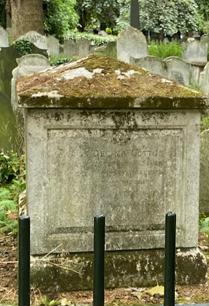
In July this year, my friend and long-term collaborator Michael Lee visited the grave of Thomas Bayes at Bunhill Fields in London. When Michael showed me the photo I was shocked. This is what Bayes’ tomb looks like in 2023: Overgrown with moss and generally in a sorry state, this is hardly a worthy monument to the man who pioneered…

read more

Coming Up: A Free Course Book on Bayesian Inference

Since 2017, Dora Matzke and I have been teaching the master course “Bayesian Inference for Psychological Science”. Over the years, the syllabus for this course matured into a book (and an accompanying book of answers) titled “Bayesian inference from the ground up: The theory of common sense”. The current plan is to finish the book in the next few months,…

read more

The Psi of Eros

This is a DeepL-assisted translation of an article for the Dutch magazine Skepter (Wagenmakers, 2023). I am grateful to the editor, Hans van Maanen, for his efforts in rewriting my original draft. The painting is a self-portrait by René Magritte called ‘La Clairvoyance’ (1936 – proposed by van Maanen to accompany the article).  TLDR;  Can psychology students really anticipate the appearance…

read more

Rosenkrantz on Severity and the Problem of Old Evidence

In the previous post I discussed the problem of old evidence and wrote “It is highly likely that my argument is old, or even beside the point. I am not an expert on this particular problem.” Sure enough, Andrew Fowlie kindly attended me to the following book chapter by Roger Rosenkrantz: Rosenkrantz, R. D. (1983). Why Glymour is a Bayesian. In…

read more

The Problem of Old Evidence

  To my shame and regret, I only recently found the opportunity to read the book “Bayesian philosophy of science” (BPS), by Jan Sprenger and Stephan Hartmann. It turned out to be a wonderful book, both in appearance, typesetting, and in contents. The book confirmed many of my prior beliefs ;- ) but it also made me think about the…

read more

Bayesian Inference in Three Minutes

Recently I was asked to introduce Bayesian inference in three minutes flat. In 10 slides, available at https://osf.io/68y75/, I made the following points: Bayesian inference is “common sense expressed in numbers” (Laplace) We start with at least two rival accounts of the world, aka hypotheses. These hypotheses make predictions, the quality of which determines their change in plausibility: hypotheses that…

read more