Book Review of “Bayesian Probability for Babies”

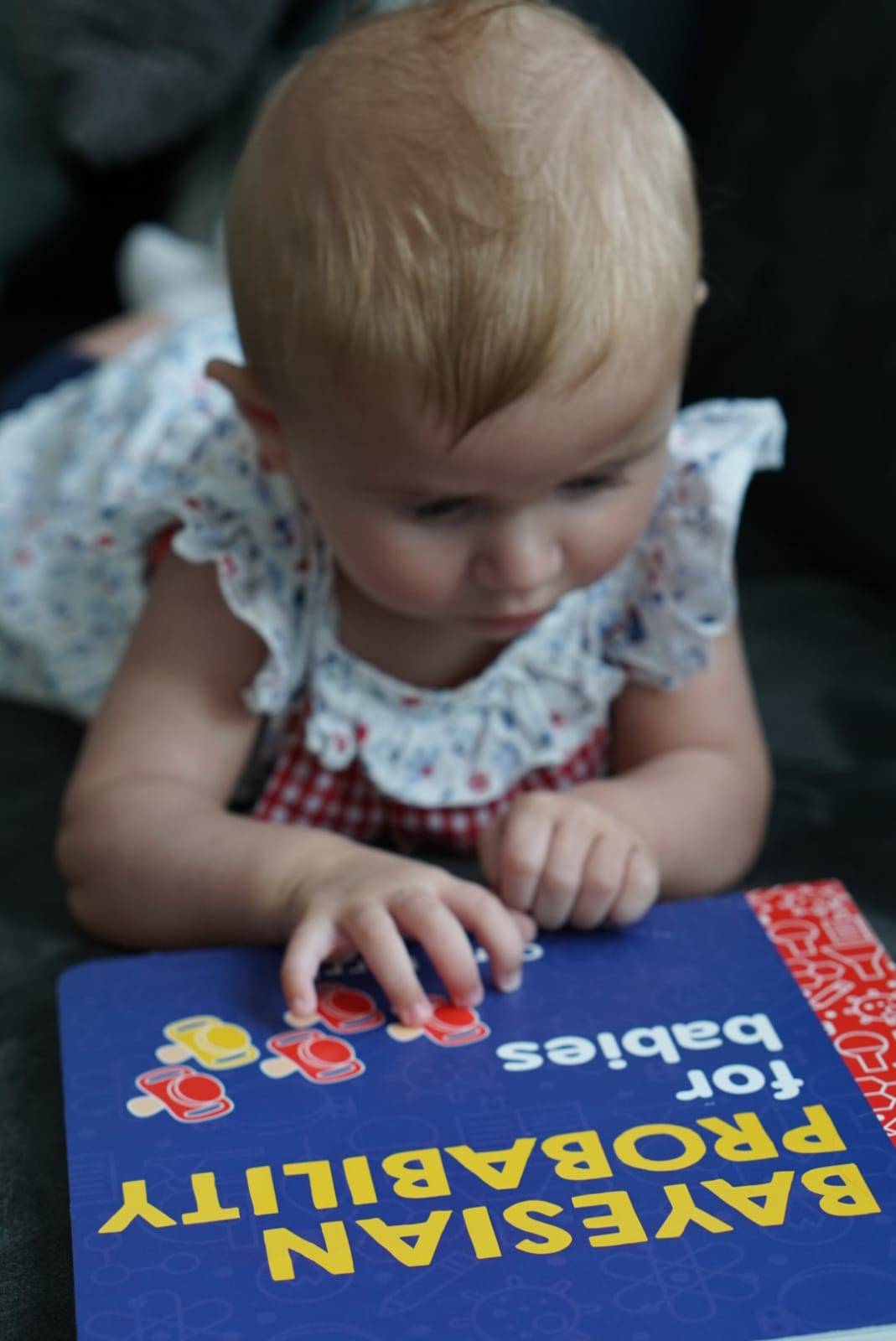
“Bayesian Probability for Babies” is a book that explains Bayes’ rule through a simple story about cookies. I battle-tested the book on my two-year old son Theo (admittedly no longer a baby), and he seemed somewhat intrigued by the idea of candy-covered cookies, although the more subtle points of the story must have eluded him. Theo gives the book three…

read more

Progesterone in Women with Bleeding in Early Pregnancy: Absence of Evidence, Not Evidence of Absence

Available on https://psyarxiv.com/etk7g/, this is a comment on a recent article in the New England Journal of Medicine (Coomarasamy et al., 2019). A response by the authors will follow at a later point. A recent trial assessed the effectiveness of progesterone in preventing miscarriages.1 The number of live births was 74.7% (1513/2025) in the progesterone group and 72.5% (1459/2013) in…

read more

Preprint: Laypeople Can Predict Which Social Science Studies Replicate

This post is an extended synopsis of Hoogeveen, S., Sarafoglou A., & Wagenmakers, E.-J. (2019). Laypeople Can Predict Which Social Science Studies Replicate. Preprint available on PsyArXiv:https://psyarxiv.com/egw9d.      Abstract Large-scale collaborative projects recently demonstrated that several key findings from the social science literature could not be replicated successfully. Here we assess the extent to which a finding’s replication success relates to…

read more

Book Review of “Thinking in Bets”, Part 2 of 2

This week’s post continues the review of Thinking in Bets by Annie Duke. As I indicated last week, the book is fun and informative, and I gave it 4 out of 5 stars. Consider for instance the following footnote (p. 90):             “I lifted these [absurd reasons people give for their car accidents – EJ]…

read more

Book Review of “Thinking in Bets”, Part 1 of 2

Written by Annie “The Duchess of Poker” Duke, Thinking in Bets is a national bestseller, and for good reason. The writing style is direct and to-the-point, and the advice is motivated by concrete examples taken from the author’s own experience. For instance, one anecdote concerns a bet among a group of friends on whether or not one of them, “Ira…

read more

Redefine Statistical Significance XVIII: A Shockingly Honest Counterargument

Background: the 2018 article “Redefine Statistical Significance” suggested that it is prudent to treat p-values just below .05 with a grain of salt, as such p-values provide only weak evidence against the null. By threatening the status quo, this modest proposal ruffled some feathers and elicited a number of counterarguments. As discussed in this series of posts, none of these…

read more

A Cartoon to Explain How Blinding Works

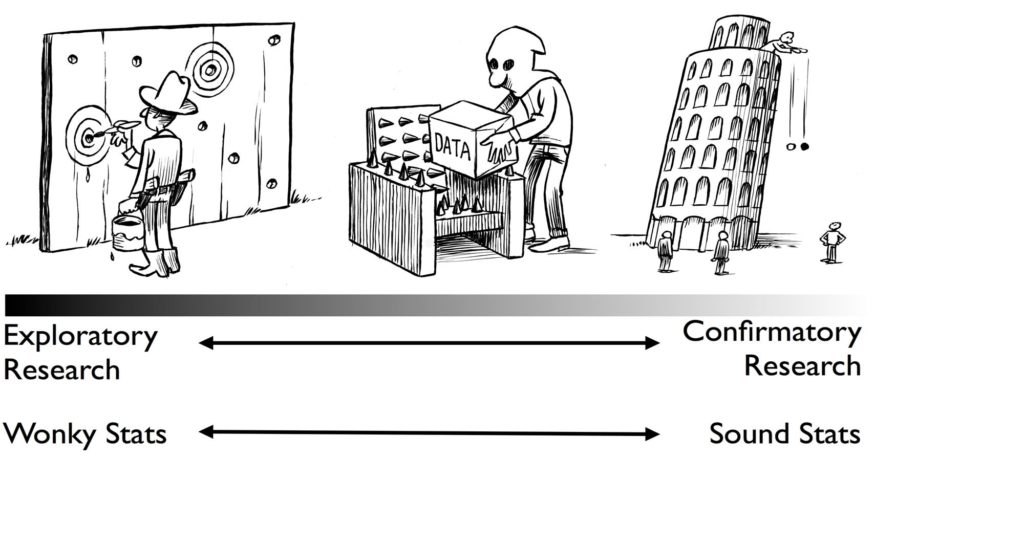
A Cartoon to Explain How Blinding Works The cartoon presented below is available from the artwork library of BayesianSpectacles.org under a CC-BY license. The cartoon was conceptualized by Alexandra Sarafoglou and was drawn by Viktor Beekman. It is included as an appendix in Dutilh, G., Sarafoglou, A., & Wagenmakers, E.-J. (in press). Flexible yet fair: Blinding analyses in experimental psychology.…

read more

Flexible Yet Fair: Blinding Analyses in Experimental Psychology

This post is an extended synopsis of Dutilh, G., Sarafoglou, A., & Wagenmakers, E.-J. (in press). Flexible yet fair: Blinding analyses in experimental psychology. Synthese. Preprint available on PsyArXiv: https://psyarxiv.com/h39jt   Abstract The replicability of findings in experimental psychology can be improved by distinguishing sharply between hypothesis-generating research and hypothesis-testing research. This distinction can be achieved by preregistration, a method…

read more