A Free Course Book on Bayesian Inference: [3.] The Rules of Probability
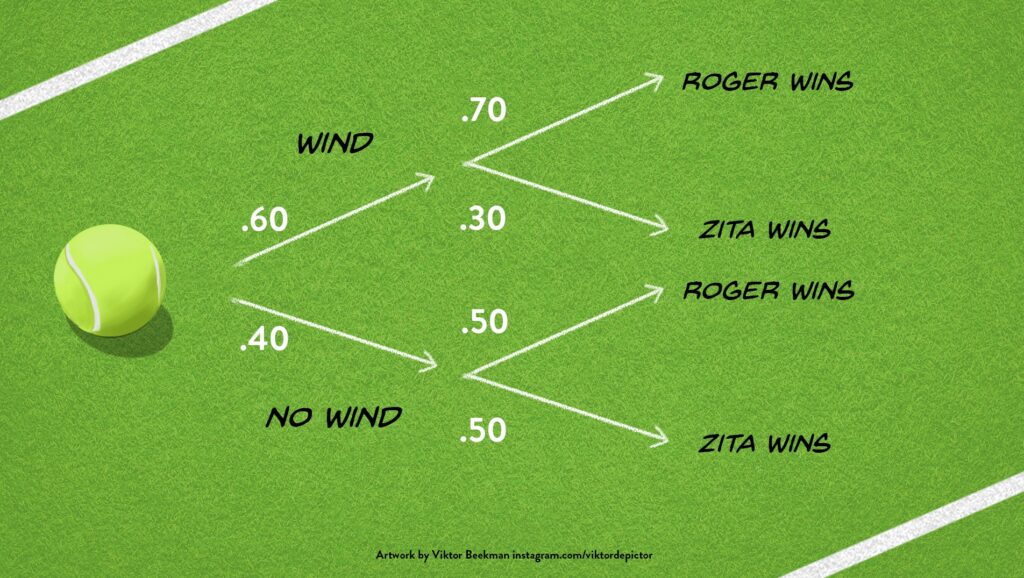
Since 2017, Dora Matzke and I have been teaching the master course “Bayesian Inference for Psychological Science”. Over the years, the syllabus for this course matured into a book (and an accompanying book of answers) titled “Bayesian inference from the ground up: The theory of common sense”. The current plan is to finish the book in the next few months,…

read more
A Free Course Book on Bayesian Inference: [2.] The Nature of Probability

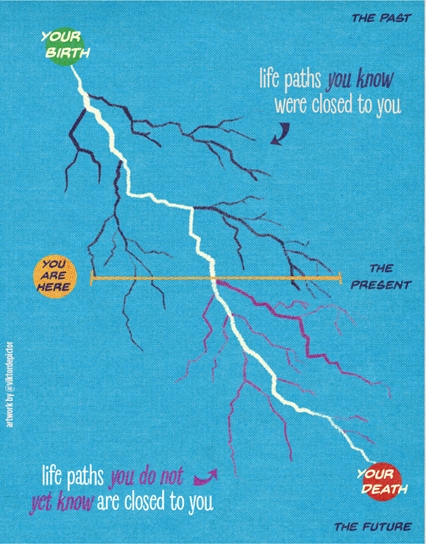
Since 2017, Dora Matzke and I have been teaching the master course “Bayesian Inference for Psychological Science”. Over the years, the syllabus for this course matured into a book (and an accompanying book of answers) titled “Bayesian inference from the ground up: The theory of common sense”. The current plan is to finish the book in the next few months,…

read more
A Free Course Book on Bayesian Inference: [1.] Preface, Synopsis, JASP

Since 2017, Dora Matzke and I have been teaching the master course “Bayesian Inference for Psychological Science”. Over the years, the syllabus for this course matured into a book (and an accompanying book of answers) titled “Bayesian inference from the ground up: The theory of common sense”. The current plan is to finish the book in the next few months,…

read more
Order-restrictions in JAGS: Five Methods Fail, One Method Succeeds

TL;DR When implementing order-restrictions in JAGS, only the “ones trick” appears to yield the correct result. Consider two unknown chances, $\theta_1$ and $\theta_2$, that are assigned independent beta priors: $\theta_1 \sim \text{beta}(1,1)$ and $\theta_2 \sim \text{beta}(1,1)$. Let’s visualize the joint posterior by executing JAGS code (Plummer, 2003) and plotting the samples that are obtained from the MCMC algorithm. This is…

read more

What Determines the Price of LEGO Sets? A Bayesian Analysis with Twists and Turns

Recently we completed a multi-year Odyssey in order to obtain Bayes factors for partial correlations. The result is now available as a preprint. Instead of delving into the finer details of Bayes factors and posterior distributions, we will provide a concrete demonstration. Specifically, we will use Bayes factors for partial correlations to address a perennial question that has tormented children…

read more

Visualizing the Equation for the Sample Correlation Coefficient

TL;DR We just preprinted a manuscript on how to teach the correlation coefficient with rectangles and squares. Check out the cool pictures. Suggestions for improvement are welcome. Abstract The equation for the Pearson correlation coefficient can be represented in a scatter plot as the difference in area between concordant and discordant rectangles, scaled by an area that represents the maximum possible…

read more

Bayes Factors for Those who Hate Bayes Factors, Part III: The Coherence Plot

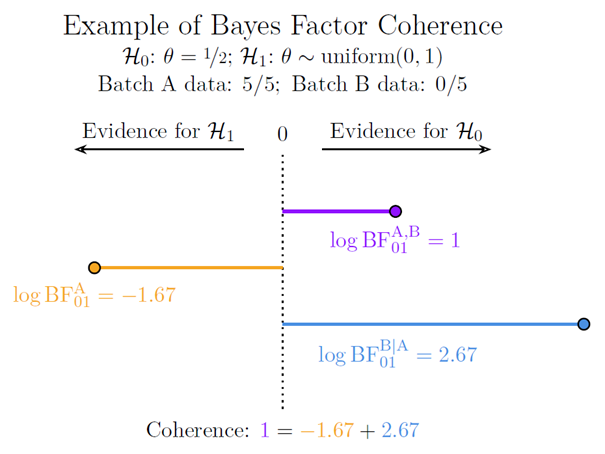
Coherence Revisited The previous post gave a demonstration of Bayes factor coherence. Specifically, the post considered a test for a binomial parameter , pitting the null hypothesis against the alternative hypothesis (i.e., the uniform distribution from 0 to 1). For fictitious data composed of 5 successes and 5 failures, the Bayes factor equals about 2.71 in favor of . We…

read more

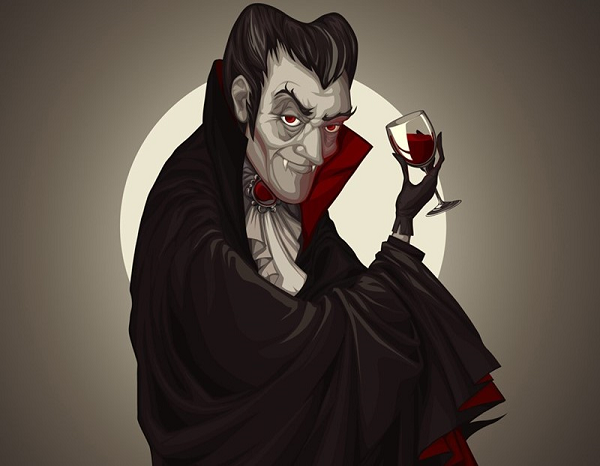
Bayes Factors for Those who Hate Bayes Factors, Part II: Lord Ludicrus, Vampire Count of Incoherence, Insists on a Dance

Image by Doremi/Shutterstock.com TLDR; The Last Dance This post demonstrates how Bayes factors are coherent in the sense that the same result obtains regardless of whether the data are analyzed all at once, in batches, or one at a time. The key point is that this coherence arises because Bayes factors are relatively sensitive to the prior distribution. Ironically, the…

read more