The Man Who Rewrote Conditional Probability

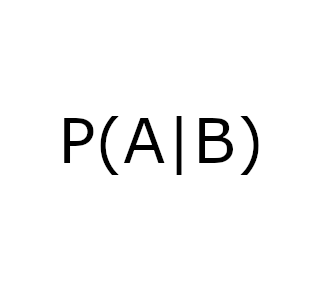
The universal notation for “the probability of A given B” is p(A | B). We were surprised to learn that the vertical stroke was first introduced by none other than… Sir Harold Jeffreys! At least Jeffreys himself seems to think so, and the sentiment is echoed on the website “Earliest Uses of Symbols in Probability and Statistics” Specifically, on page…

read more

Dennis Lindley’s Second Paradox

What is commonly referred to as “Lindley’s paradox” exposed a deep philosophical divide between frequentist and Bayesian testing, namely that, regardless of the prior distribution used, high-N data that show a significant p-value may at the same time indicate strong evidence in favor of the null hypothesis (Lindley, 1957). This “paradox” is due to Dennis Lindley, one of the most…

read more

A Short Writing Checklist for Students

A number of years ago I compiled a writing checklist for students. Its primary purpose was to make my life easier, but the list was meant to be helpful for the students as well. The checklist is here. My pet peeves: (1) abrupt changes of topic; (2) poorly designed figures; (3) tables and figures that are not described properly in…

read more

Is Polya’s Fundamental Principle Fundamentally Flawed?

One of the famous fallacies in deductive logic is known as “affirming the consequent”. Here is an example of a syllogism gone wrong: General statement     When Socrates rises early in the morning,     he always has a foul mood. Specific statement     Socrates has a foul mood. Deduction (invalid)     Socrates has risen early in…

read more

Yes, Psychologists Must Change the Way They Analyze Their Data

Back in 2011, Daryl Bem shocked the academic world by publishing an article in which he claimed to present empirical evidence for the existence of precognition, that is, the ability of people to “look into the future” (Bem, 2011). Particularly shocking was the fact that Bem had managed to publish this claim in the flagship journal of social psychology, the…

read more

The Story of a Lost Researcher Trying to Learn About Disruptive Behaviors During the Full Moon

Karoline Huth is a first-year student in our Psychology Research Master at the University of Amsterdam. This blog post describes her presentation for the recent course on Bayesian Inference for Psychology. The assignment was to conduct a Bayesian reanalysis of existing data. Kudos to Karoline for being brave enough to share her work here! [EJ] Presentation Intro and Background Bayesian…

read more

A Galton Board Demonstration of Why All Statistical Models are Misspecified

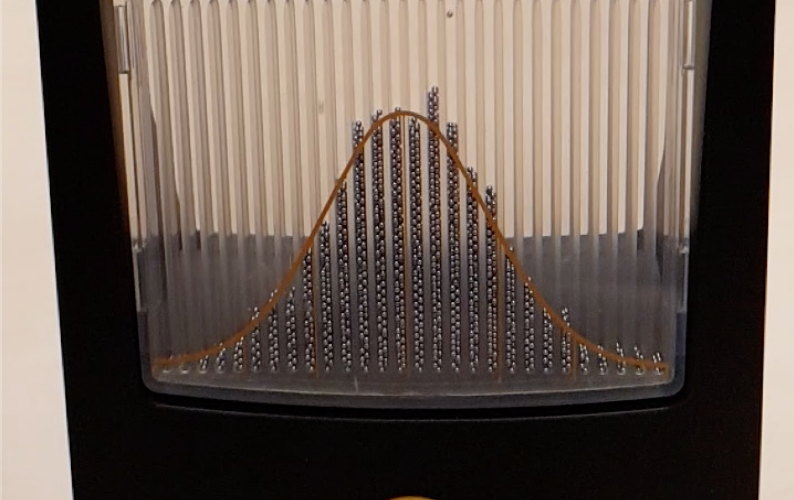
The Galton board or quincunx is a fascinating device that provides a compelling demonstration of one the main laws of statistics. In the device, balls are dropped from above onto a series of pegs that are organized in rows of increasing width. Whenever a ball hits a particular peg, it can drop either to the right or to the left,…

read more

The Single Most Prevalent Misinterpretation of Bayes’ Rule

We thank Alexander Ly for constructive comments on an earlier draft of this post. Bayes’ rule tells us how to learn from experience, that is, by updating our knowledge about the world using relative predictive performance: hypotheses that predicted the data relatively well receive a boost in credibility, whereas hypotheses that predicted the data relatively poorly suffer a decline (e.g.,…

read more