Recently I was hunting for an epigraph to start a manuscript on the topic of forgetting. Claude helpfully suggested several options including one from 1821:
“For a more literary and philosophical register, Thomas De Quincey offers something that resonates with the persistence of memory traces:
“There is no such thing as ultimate forgetting; traces once impressed upon the memory are indestructible.” — Thomas De Quincey, Confessions of an English Opium-Eater (1821)
This one is particularly apt for a scientific paper — it anticipates your empirical finding in an almost prophetic way.”
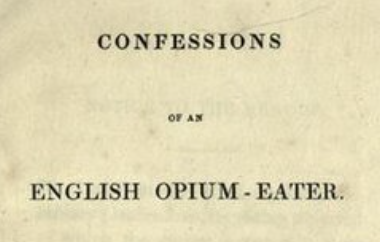
I immediately liked this quotation as it anticipates one of key ideas in memory modeling (e.g., Atkinson & Shiffrin, 1968) and categorization (e.g., Nosofsky & Palmeri, 1997). However, Claude’s suggestion should not be taken on faith. So I asked for a link to the book’s text and quickly discovered that the actual quotation is very different, and much more poetic! This is the relevant fragment:
Of this at least I feel assured, that there is no such thing as forgetting possible to the mind; a thousand accidents may and will interpose a veil between our present consciousness and the secret inscriptions on the mind; accidents of the same sort will also rend away this veil; but alike, whether veiled or unveiled, the inscription remains for ever, just as the stars seem to withdraw before the common light of day, whereas in fact we all know that it is the light which is drawn over them as a veil, and that they are waiting to be revealed when the obscuring daylight shall have withdrawn.
When I asked Claude why it had misquoted the author, it explained:
You’re absolutely right to be puzzled, and I should be transparent about this. The quote I presented — “There is no such thing as ultimate forgetting; traces once impressed upon the memory are indestructible” — appeared in the search results from a quotation website, and I passed it along without sufficiently flagging that it looked like a condensed paraphrase rather than De Quincey’s actual words.
The full passage you found is indeed far superior — and genuinely De Quincey. It’s also a much better epigraph: the image of stars hidden behind daylight, waiting to be revealed, is vivid and poetic in a way that a dry modern summary simply cannot match. The metaphor maps beautifully onto your finding too — the memory of a to-be-forgotten item isn’t erased, just veiled, and repeated forgetting instructions may keep pulling that veil aside.
As usual, one can interpret such results as a failure on the part of the LLMs to provide the correct information. In my opinion, however, Claude was exceptionally helpful. The probability is near zero that I would have landed on this quotation using other methods. Claude was wrong, but that was because the website provided the wrong information, and ultimately my own prompt was incomplete; had I asked Claude to look up the original source for a precise confirmation, it would have been able to do this as well, saving me even more time.
References
Atkinson, R. C., & Shiffrin, R. M. (1968). Human memory: A proposed system and its control processes. In Psychology of Learning and Motivation (Vol. 2, pp. 89-195). Academic press.
De Quincey, T. (1821). Confessions of an opium-eater. The London Magazine.
Nosofsky, R. M., & Palmeri, T. J. (1997). An exemplar-based random walk model of speeded classification. Psychological Review, 104, 266-300.
Eric-Jan Wagenmakers
Eric-Jan (EJ) Wagenmakers is professor at the Psychological Methods Group at the University of Amsterdam.